
Specialist program

Centre for Excellence in Therapeutic Care

The CETC mobilises knowledge about “what works” in out-of-home care to better resource carers and organisations supporting children and young people living in all forms of care, including foster and kinship care, residential care and secure care.

Blogs

spotlight

Leading with heart (and a little humour) in trauma-informed leadership

Lately, I’ve been thinking a lot about trauma-informed leadership and wondering about the role humour plays in it. At first glance, humour might seem like an odd companion to serious work with vulnerable children, youth,...

Explore how humour, empathy, boundaries, and a light-hearted approach strengthen trauma-informed leadership.
spotlight

When love feels hard: Understanding and healing blocked care

Blocked Care. It’s a phrase that sounds clinical, but behind it lies something deeply human and deeply painful. It’s the moment when a carer’s heart, once open and overflowing with love, begins to close without them even realising. It’s what happens when...

What blocked care is, why it happens, and how carers can gently reconnect with empathy and hope.
spotlight

Research driving real change in therapeutic residential care

The Centre for Children and Young People (CCYP) in collaboration with Australian Childhood Foundation continues to demonstrate the power of research to shape policy and practice, with latest findings from the ARC Linkage project making...

New research from the ARC Linkage project is shaping policy and practice in therapeutic residential care, strengthening relationships, safety, and wellbeing for young people in out-of-home care.
spotlight

Why children in out-of-home care struggle to sleep

The following blog is based on a paper I presented at the International Child Trauma Conference in August 2025.  I have always believed that the way a child sleeps tells us something profound about how safe...

Why children in out-of-home care struggle to sleep, and what their night-time reveals about trauma, safety, and healing.
spotlight

Secure care for children at risk – let’s start the conversation

Not many people know what secure care is and are surprised to hear that it exists in many states and territories in Australia. It’s anonymity in a way protects children and young people. It protects...

When children or young people pose a serious risk of harm to themselves, how do we respond with care, not control? This article opens a conversation about secure care, safety, and compassion.
spotlight

Why spit hoods don’t create safety in youth detention

The Northern Territory Government’s decision to reintroduce spit hoods in youth detention is a step backwards. These devices don’t create safety—they escalate harm, undermine trust, and make it harder for both young people and youth...

The Northern Territory Government’s decision to reintroduce spit hoods in youth detention is a step backwards. These devices don’t create safety—they escalate harm, undermine trust, and make it harder for both young people and youth justice officers to feel safe.
spotlight

Caring for carers: Why foster carer well-being and role satisfaction matter

The experiences that inspired a PhD thesis My career has been full of twists and turns. I studied social work straight out of high school. After securing a placement in child protection during my studies,...

Supporting foster carer well-being is key to a stable and nurturing care system. In this blog, PhD student Amy Miko reflects on the journey that led her to research kinship carer role satisfaction and retention.
spotlight

Fight, flight, freeze, and fibbing: Lying as a trauma-based behaviour

In almost every session I have run for foster and kinship carers, someone tells a story about a child or young person in their care who regularly lies. I can feel their frustration at the frequency...

In regular foster and kinship carers sessions I run, someone tells a story about a child or young person in their care who regularly lies.  In this blog we run through reasons why children lie and tips on how to address lying.

    Training

    Type of training

    Type of training

    Subject

    Subject

    In a collection

    In a collection

    Find now

    Resources

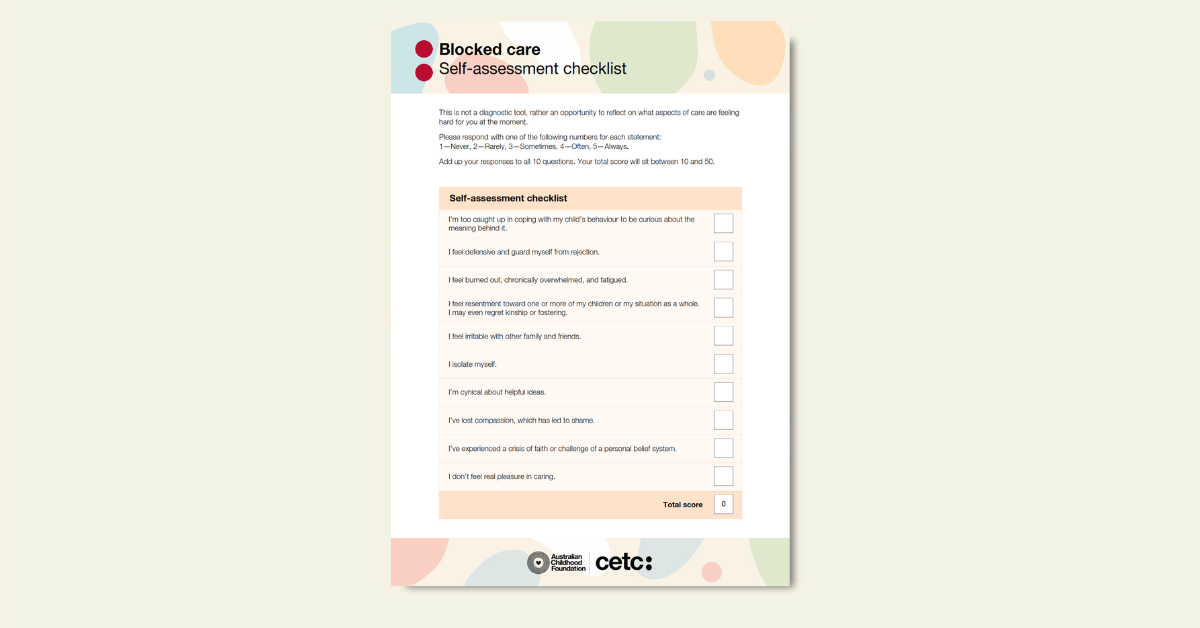
    Blocked care: Self-assessment checklist

    A reflective checklist to help carers notice signs of blocked care and emotional fatigue.

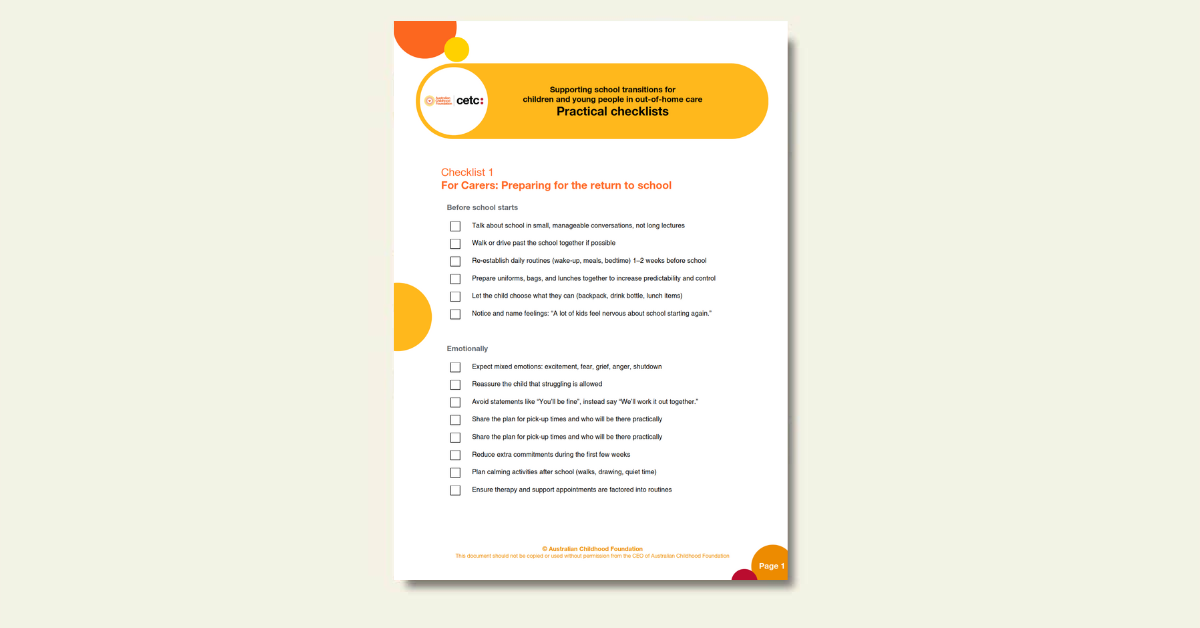
    Practical checklists: Supporting school transitions for children and young people in out-of-home care

    A downloadable resource to support school transitions for children and young people in OOHC.

    Secure care in Australia: exploring transparency, practice and purpose

    Recorded webinar – Inside organised exploitation: A conversation with Michael Salter

    Collection Filter

    Collection Filter
    • Centre for Excellence in Therapeutic Care (19)
    • Safeguarding Children Services (8)
    • Bringing Up Great Kids (2)

    Show more

    WATCH NOW

    Videos

    Sorry, no content found.

    Contribute

    Do you have an idea you would like to share with us and our readers? Please contact us via email support@childhood.org.au
    Preferred format for any blog collaboration is a very brief outline and a link to further information.