
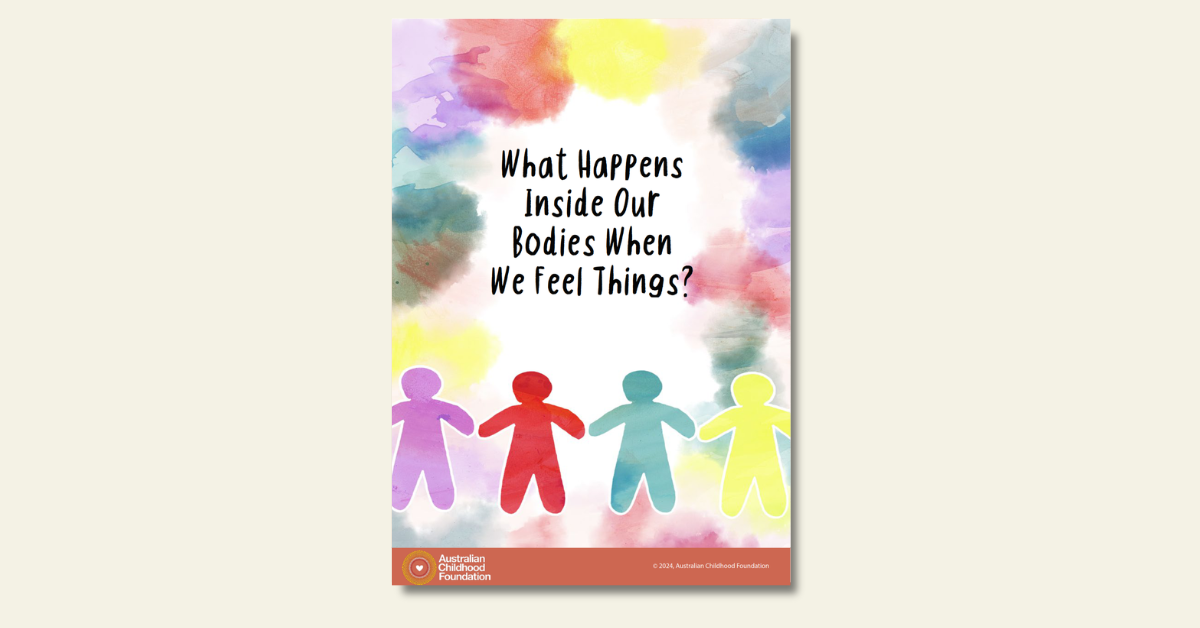
What Happens To Our Bodies When We Feel Things?

Sep 2026

What Happens Inside Our Bodies When We Feel Things? is a gentle and engaging resource that helps children understand the different ways feelings can be experienced in the body. Through relatable examples, reflective questions and creative activities, it encourages children to notice their body sensations with curiosity rather than judgment. The resource reassures children that all feelings are welcome, that body experiences can change over time, and that learning to recognise these sensations can support self-understanding, communication and wellbeing.

Key messages

  • Feelings are experienced not only in our minds, but also in our bodies.
  • Taking time to notice body feelings can help children make sense of their experiences and build self-awareness.
  • Every child’s body responds differently, and all body feelings can be approached with curiosity and compassion.
  • Body feelings change over time and can be safely explored through reflection, conversation, creativity and play.
What Happens Inside Our Bodies When We Feel Things? - Practice tool

You may be interested in:
Bringing Up Great Kids – Parenting After Family Violence Program
Women and their children are traumatised by the experience of family violence. It terrifies them. It destabilises the foundations of their world. It undermines the strengths of their relationships. It...
Read more
9 plain english principles of trauma-informed care
The trauma literature can be overwhelming. Its basis in neuroscience offers incredible insights into its impact. But it also is challenging to decipher and make relevant to the ways in...
Read more
Ethical dilemmas in child protection practice: a tale of two stories
Decision-making in child protection is complex. There are so many decisions that are made on a daily basis, often made in the context of competing priorities, increased productivity pressures, and...
Read more