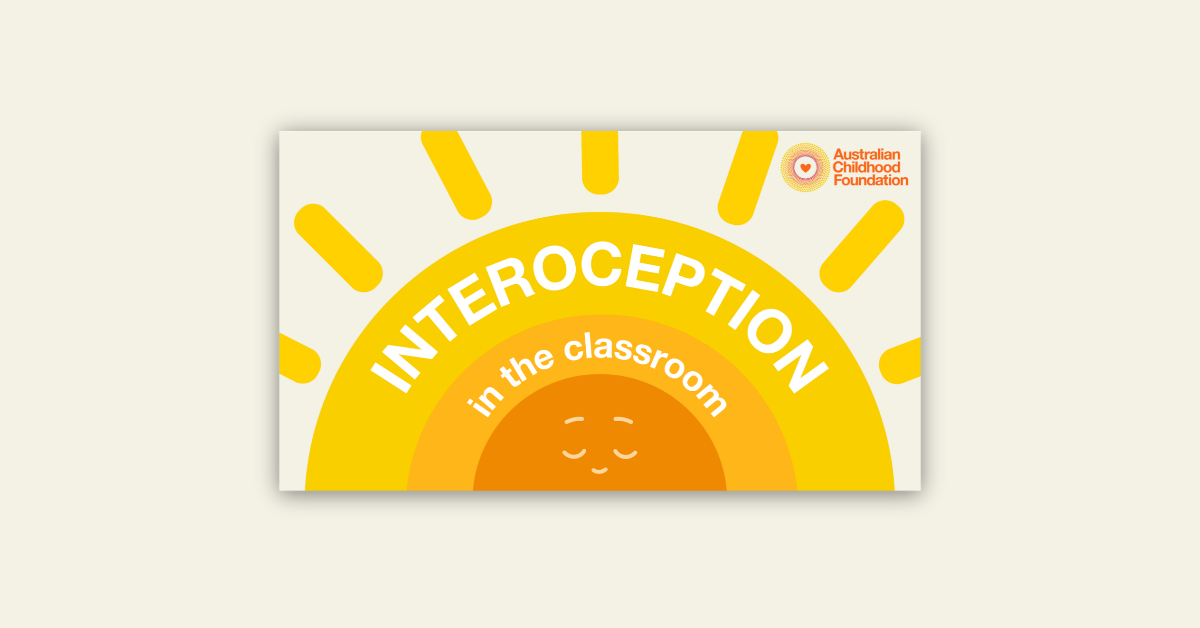
Interoception in the classroom: building self-regulation through body awareness

Oct 2026

Interoception in the Classroom is a practical learning resource designed to help students understand interoception, or the ability to recognise and interpret signals from within the body. Through interactive discussions, reflection activities, and self-regulation strategies, students learn how body signals influence emotions, behaviour, and wellbeing. The resource provides educators with engaging exercises to support the development of interoceptive awareness and emotional regulation skills in classroom settings.

Key messages

  • Interoception is the ability to recognise and interpret internal body signals such as hunger, a racing heart, shivering, or butterflies in the stomach.
  • Accurate interoceptive awareness helps students identify emotions earlier and use effective self-regulation strategies before feelings become overwhelming.
  • Difficulties with recognising or interpreting body signals can affect a person’s ability to regulate emotions, attention, and behaviour.
  • Interoception plays an important role in maintaining equilibrium by helping the body recognise and respond to internal needs.
  • Practical strategies for developing interoceptive awareness include body scans, deep breathing, mindful daily activities, and sensory tools and activities.
  • Interoceptive experiences are unique to each individual, and developing awareness of personal body signals supports lifelong emotional wellbeing and self-regulation.
Interoception in the classroom - presentation

You may be interested in:
9 plain english principles of trauma-informed care
The trauma literature can be overwhelming. Its basis in neuroscience offers incredible insights into its impact. But it also is challenging to decipher and make relevant to the ways in...
Read more
What comes after trauma-informed practice?
Abuse and violence rock children to their very core. And as a result, children are overwhelmed with the internal reactions that race through them. They do anything to survive, not...
Read more
Free play and well-being
Play is universal, children all around the world do their own version of play. Even if play is not intentionally encouraged in a country or community somehow children still find...
Read more