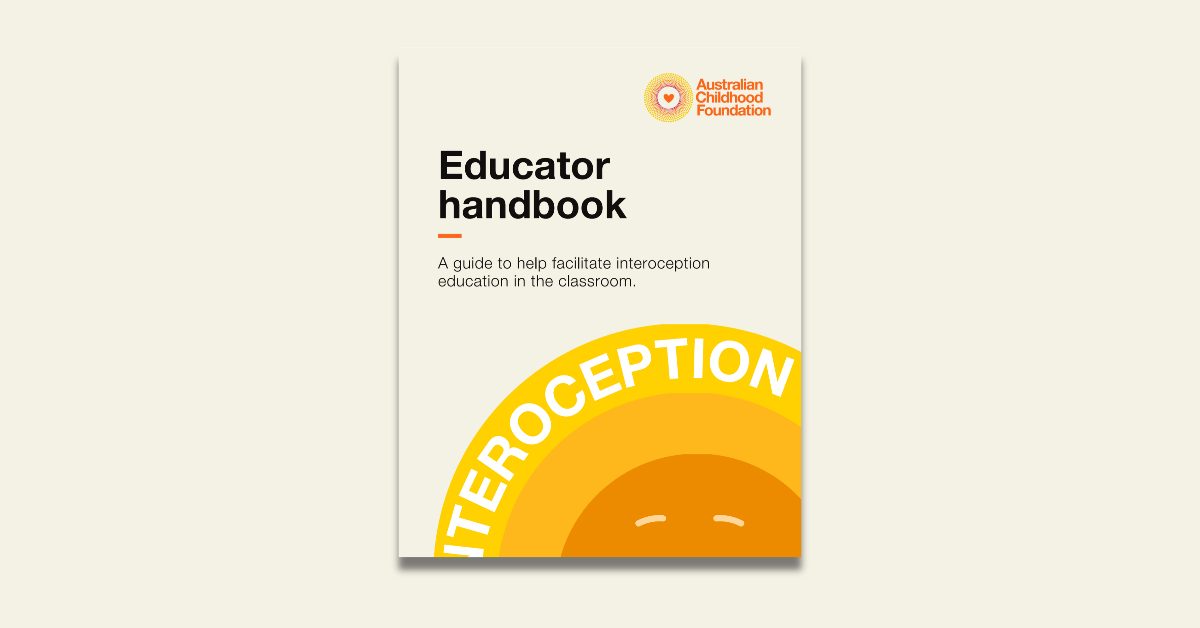
Educator handbook: a guide to facilitating interoception education in the classroom​

Oct 2026

This guide to facilitating interoception education in the classroom is a practical resource designed to support educators in delivering interoception learning to students. The handbook explains the foundations of interoception, outlines its benefits for emotional regulation and wellbeing, and provides facilitator notes, delivery guidance, and supporting resources to help educators confidently run classroom-based interoception workshops.

Key messages

  • Interoception is the body’s internal sensing system, helping people recognise and interpret signals from within the body that influence physical and emotional wellbeing.
  • Developing interoceptive awareness supports self-regulation by helping students recognise and respond to their body’s needs.
  • Benefits of interoception education include improved emotional regulation, reduced stress, and enhanced focus and attention.
  • Schools implementing interoception learning have reported reduced behavioural challenges and positive outcomes for student engagement.
  • The handbook provides workshop delivery guidance, facilitator notes, classroom discussion prompts, and practical activities to build interoceptive awareness.
  • Educators are encouraged to use a range of interoception activities and adapt learning to support diverse student needs and experiences.
Educator handbook: a guide to facilitating interoception education in the classroom

You may be interested in:

9 plain english principles of trauma-informed care
The trauma literature can be overwhelming. Its basis in neuroscience offers incredible insights into its impact. But it also is challenging to decipher and make relevant to the ways in...
Read more
What comes after trauma-informed practice?
Abuse and violence rock children to their very core. And as a result, children are overwhelmed with the internal reactions that race through them. They do anything to survive, not...
Read more
Free play and well-being
Play is universal, children all around the world do their own version of play. Even if play is not intentionally encouraged in a country or community somehow children still find...
Read more