
Joy and grief: what it felt like for young people to be heard at ISPCAN 2026
Sep 2026
Written by Ada Robertson
Recently I had the opportunity to volunteer with the Australian Childhood Foundation at the ISPCAN Congress, which was my first conference experience, opening my eyes to a world I never imagined I would be a part of when I was younger. Walking into this space full of professionals, experts, leaders and advocates was honestly terrifying and on the first day I felt completely like a fish out of water. Yet the underlying theme of the presentations I sat in on was the centrality of lived and living experience in enacting meaningful systems change to better protect the rights of children and young people. This meant I had a place.
Watching many inspiring and strong individuals share their stories with such courage and passion was incredibly moving, and I began to feel something within me shift towards a recognition that my lived experience and voice mattered too. As a service-user for many years, my voice had consistently been positioned as less important than the voices of the professionals around me, and I hadn’t realised how deeply I had internalised this until I saw other young people sharing their similar experiences and being celebrated for it.
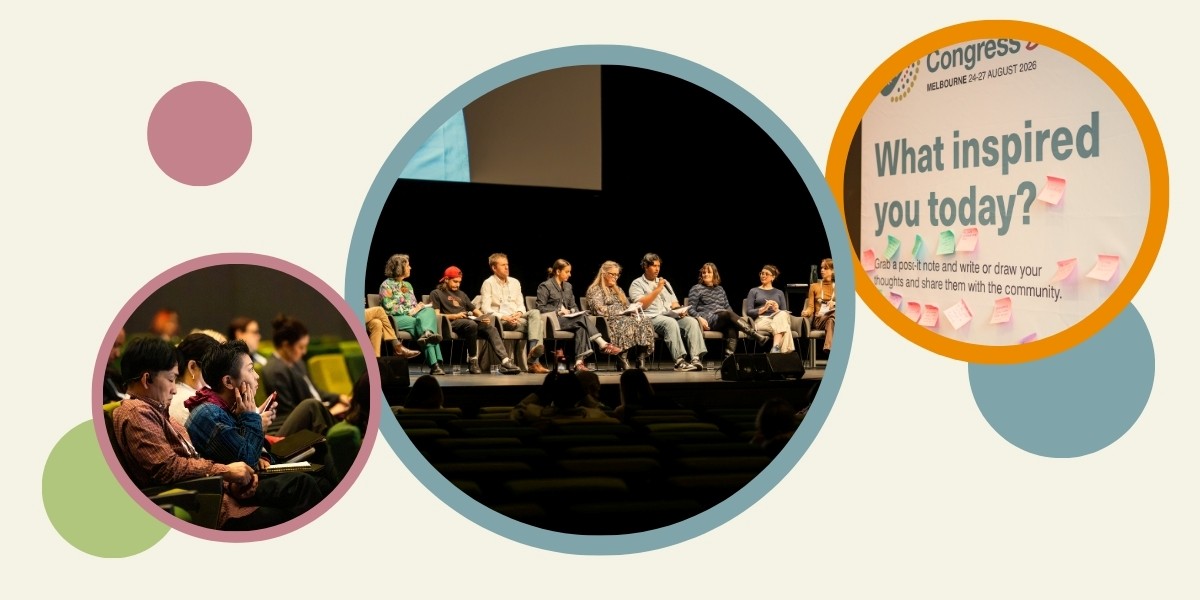
While the three days were full of many inspiring and interesting presentations, the key moment that stuck with me was watching the Youth and Children’s Commissioners Panel, in which young people spoke with such honesty and grace about their experiences of systems and gave powerful calls to action to the commissioners. To witness the commissioners, people with such influence and power, sit and truly listen to these young people, and then commit to actions based on what they learned was deeply moving. Again, I had never imagined that there would be a space where this was possible, let alone where the voices of young people with experiences like my own would be taken so seriously and heard.
Although these encounters were encouraging and important in being able to recognise the value of my own voice, I also felt a sense of loss. I considered how things may have been different if I had learned that young people like me were able to enter these spaces, that they even existed, or if a professional had told me that my experiences mattered – that I had my own wisdom and something to offer. I felt grief as I thought back on my days spent in out-of-home-care and hospitals and thought of the times I had tried to advocate for myself and my rights, only to be told by other service-users with their own wisdom to ‘keep quiet so I don’t get in trouble’. I thought of the young person I was who wanted to be heard but was constantly silenced and felt so proud of her for making it to this point.
I have learned to compress and mold my experiences into expressions which are appeasing and not too confrontational for the adults around me, but the young people who spoke at ISPCAN showed me the importance and power of honestly sharing one’s own story without filters or without being dressed in professional jargon. This gave me the courage to briefly share my own lived experiences when introducing one of the sessions in the youth stream, which felt completely surreal but also incredibly powerful in being able to take ownership of my story and share it in a way that was heard and respected.
For future conferences, I hope more young people can access these spaces so that their experiences and wisdom can be validated and acknowledged as central to discussions relating to their own lives. I believe that this could be transformative for young people in feeling respected and valued but also crucial in building more nuanced and deeper understandings of the complex situations and systems which produce harmful outcomes for children and young people.
Being part of the ISPCAN Congress has sparked something within me, a strength and hope in a future which is being shaped and led by young people, driven by collective resilience, lived experiences and the wisdom that comes from that. If anyone can take anything away from this congress, I hope it was the very real sense of urgency required to reform our systems which continue to reproduce harm and violate children’ s rights, and the centrality of lived experience in combatting this. I know I left with my passion reignited, with a small glimmer of hope for the potential for a better world in which children and young people are safe from abuse and neglect and able to live meaningful lives as defined by them. This hope is something I will hold onto in my future career in social work, and I hope I will have more opportunities to share my experiences to advocate for children and young peoples’ rights, safety and freedom.
About the author
Ada Robertson is a Social Work student at RMIT University and advocate for meaningful youth participation in child protection. Drawing on her lived experience, she is passionate about ensuring young people’s voices are heard in the decisions that affect their lives.